Engineers Cost Estimate Clarification
Understanding the Park Project and the Engineers’ Cost Estimates
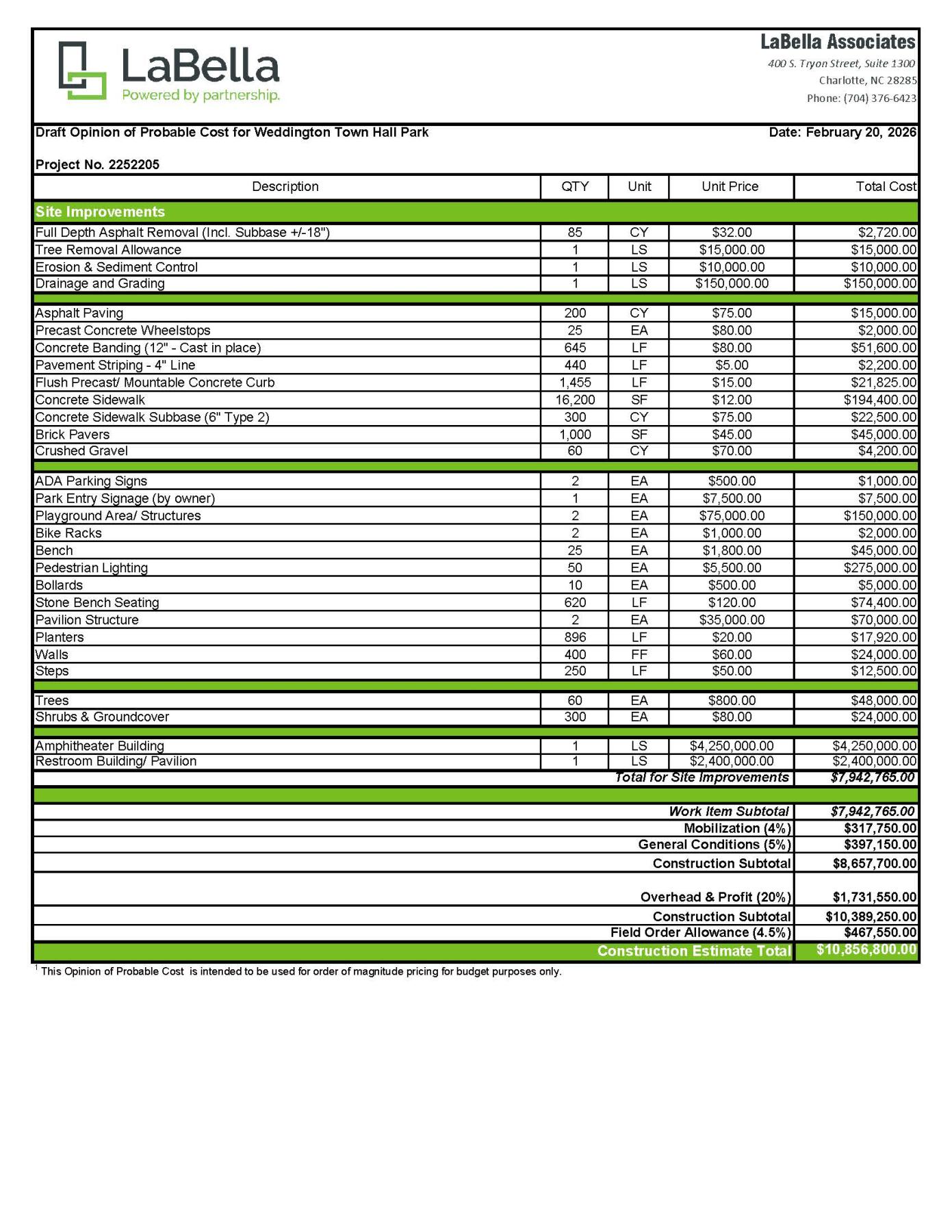
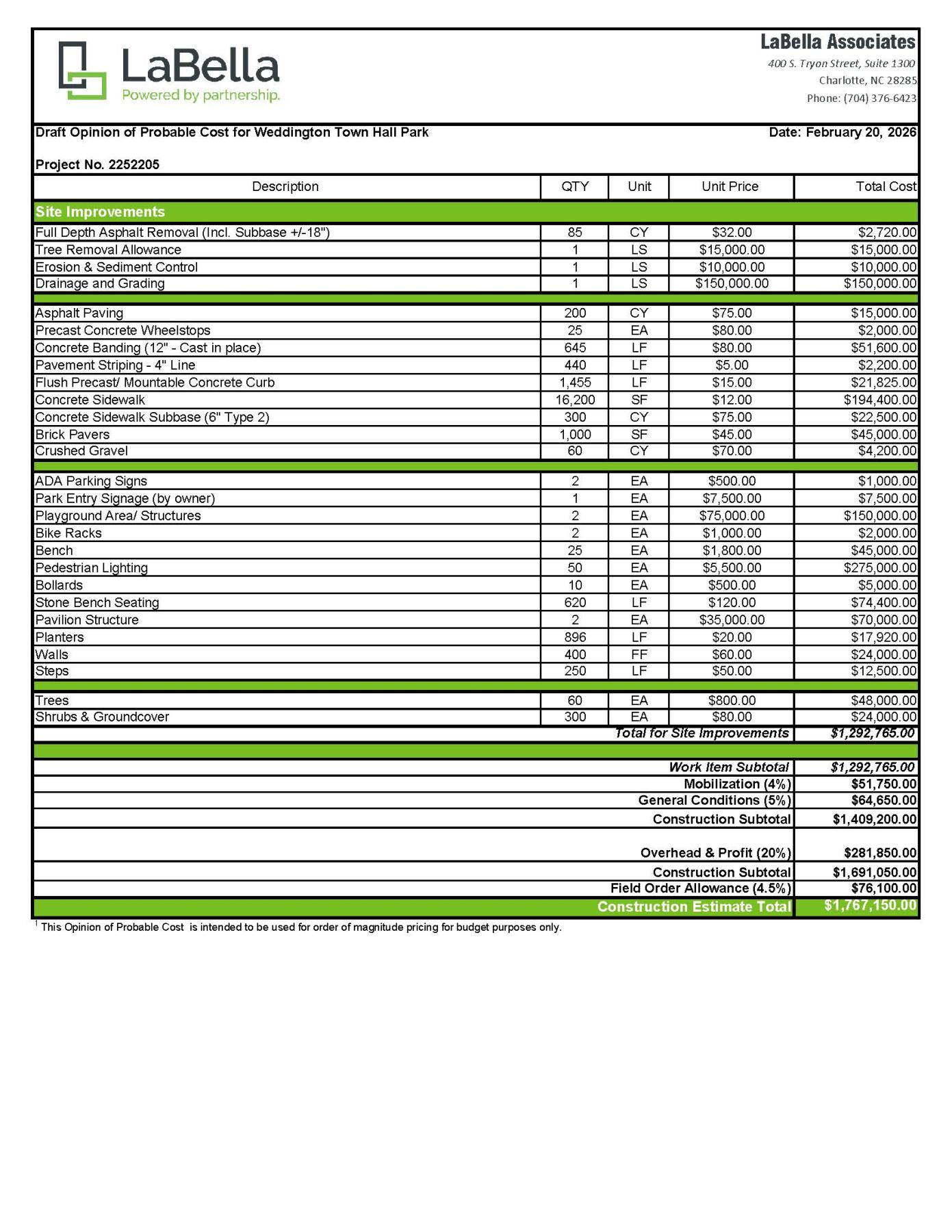
The Town has received three public records requests related to the park and its associated documentation. While working to fulfill those requests, I came across the engineers’ estimates of probable cost. As the documents were reviewed, I noticed that one estimate was approximately $10.8 million, while another was approximately $1.7 million.
As someone who is relatively new to Weddington and has been working to put all of this information together, I began to understand where the rumor of a $10 million park cost came from. While it is technically correct that an engineer’s probable cost estimate of $10.8 million exists, it is equally important to acknowledge that an estimate of $1.7 million also exists.
It is important to note that neither plan has been approved by the Town Council. As LaBella has described the drawings, they are a “cartoon of what could be.” In addition, both cost estimates include the following statement in small print: “This Opinion of Probable Cost is intended to be used for order of magnitude pricing for budget purposes only.”
In other words, these estimates are not final project cost, nor do they represent approved plans. They are intended to provide a general understanding of the potential cost of a project based on the concepts being considered in the probable cost estimate. It might also be helpful to provide some background on how this process typically works and what these figures actually mean.
What Does the Typical Process Look Like?
Typically, the first step is to gather public input and determine the level of community support for a project. This is usually accomplished through a survey or another tool designed to collect residents’ feedback.
The second step would involve meetings with the public to develop and refine a design that reflects what residents would like to see. Once a design has been established, it would be sent to an engineer for an estimate of probable cost.
With that estimate in hand, the next step would be to evaluate the available options. The project might proceed as designed, be modified to reduce costs, or be completed in phases over a period of time. Once those decisions have been made and funding has been secured, the project can move toward implementation. Before grant funds can be disbursed, the project must be developed enough to have an established scope of work.
How Did We Get to This Point?
I am relatively new to Weddington, so I cannot speak firsthand to every step of this project's history. However, my understanding is that the park has been discussed for approximately 15–20 years.
It is also my understanding that the various steps in the process were undertaken over the course of several years. There has been some debate about whether the original survey remains valid, but ultimately, information about the project was compiled into a Request for Qualifications (RFQ), and LaBella was selected to perform the work outlined in that process, which was to take the project through the rezoning process. Earlier this year, two public meetings were held to gather citizen input.
In September, when the Town received feedback from residents indicating that some were uncomfortable with the plans developed in early 2026, the Town instructed LaBella to return to the design-development and public-input stage of the process.
That seemed like a reasonable response, particularly given the concerns expressed about the potential cost of the park. Since then, we have held two additional public input meetings.
This is where we are today.
The next step is for the Town Council to weigh in on the project so that a decision can be made about the direction of the project and a possible rezoning of the property. The contract with LaBella is to take the property through rezoning, not to develop a final design.
What Happens Next?
Once the Council determines the direction it wants the project to take, it can evaluate the cost-related options discussed above. Those options may include proceeding with the design, making changes to reduce costs, or considering a phased approach.
The Mayor and Council have made it clear that their goal is to complete the project with a budget of around $3.4 million. This would allow the Town to complete the project using the available funds outlined in the clarification email that was previously sent. They have also made it clear that they have no intention of raising taxes to cover the cost of the park or the associated maintenance of the park.
The important takeaway is that the figures currently being discussed are estimates associated with potential designs, not final or approved project costs. The Town, with the help of residents, is still working through the process of determining what the park should include and how best to accomplish that within the available budget. A final design will not be settled on until after the rezoning process is complete.
The Council’s hope is that providing this context will help residents better understand where the project stands, how the cost estimates fit into the process, and what decisions still need to be made. Thank you for your interest in the project and your participation as the project moves forward. You can still comment by sending your input to community.input@townofweddington.com until November 4, 2026.
I apologize for the length of this letter, but I hope that I was able to shed some light on a lot of confusion surrounding the associated costs. If you still have questions, please reach out to your elected official or the Mayor. If you need contact information, or if you are unsure who your representative is, I would be happy to point you in the right direction.
Doug Gailey
Town Administrator/Clerk
- Public Records & Cost Estimates: In responding to three public records requests, I reviewed two separate engineer’s estimates of probable cost: one for approximately $10.8 million and another for approximately $1.7 million.
- Status of the Plans: Neither plan has been approved by the Town Council. As design firm LaBella noted, the drawings are simply a “cartoon of what could be.” Both documents explicitly state they are an “Opinion of Probable Cost... intended to be used for order of magnitude pricing for budget purposes only,” rather than finalized budgets.
- The Planning Process: A typical municipal project begins with community surveys and public design workshops before sending concepts for preliminary cost estimates. Once estimated, towns evaluate whether to build as designed, value-engineer to cut costs, or complete the project in phases as funding allows.
- Project Background: While a town park has been discussed for 15–20 years, LaBella was selected through an RFQ process to develop concept designs and take the project through the rezoning process. Following resident concerns in September of 2026 regarding potential costs, the Town directed LaBella back to the design development and public-input stage, leading to two recent community meetings.
- Next Steps & Budget Target: The Town Council will review public feedback to establish the project's direction and scope. Final design will not be decided upon until the project is past the rezoning stage. The Mayor and Council have set a target budget of around $3.4 million, which aligns with the available town funds outlined in a prior clarification email. There is no intent to raise taxes for construction or maintenance.